
Best First JDM Car to Import
The Octane Buyer's Guide · Houston, TX
Best First Car to Import A Japanese-Import Buyer's Guide
From a $5,000 kei truck to a 2JZ legend — the most approachable Japanese-market imports for a first-time buyer, what to weigh before you commit, and how Octane sources and imports any of them.
Why Your First Import Should Be an Easy One
The Japanese-market scene is full of dream cars — but your first import does not have to be one of them. The smartest first import is the one that teaches you the process without punishing your wallet or your patience. This is Octane Automotive's plain-English guide to picking it.
Importing a car from Japan is no longer a fringe adventure. Under the US 25-year rule, a vehicle becomes exempt from federal FMVSS safety standards and clears the EPA's pathway once it turns 25, which means an enormous catalog of right-hand-drive Japanese cars is now perfectly legal to bring home. The process is well-trodden, the paperwork is standard, and a good specialist can handle the whole thing for you. (For the full step-by-step, read our pillar guide on how to import a car to the USA.)
So the real question is not can you import — it is what should you import first. Some cars are cheap, simple and forgiving; others demand specialist knowledge, deep pockets, or a tolerance for ongoing maintenance. Below we rank nine genuinely approachable picks from easiest to most demanding, with an honest read on each, and a link to its full Octane model guide where we have one.
“The best first import is not the fastest one. It is the one that gets you through the process smiling — and back for a second.”
What to Weigh Before You Buy
Before you fall for a photo on an auction sheet, run the car past these seven questions. They separate a great first import from an expensive lesson.
Budget — landed, not listed
The auction price is only the start. Add shipping, the 2.5% federal duty (cars), customs brokerage, state title and registration, and any reconditioning. A $4,000 kei truck can land near $10,000 once it is on US plates. Always budget the all-in landed cost, not the Japan price — our purchasing page walks through exactly how an Octane buy works.
Parts availability
Some imports are a phone call away from any part you need; others mean waiting on a container from Japan. Toyota and Mazda mechanicals (Miata, Estima, Altezza, Supra) have the deepest US aftermarket and OEM support. Rarer kei models and niche trims can be harder to feed.
Reliability and condition
Japanese-market cars are famous for low mileage and clean histories — but odometer tampering and accident-grade auction cars exist. Buy on the auction inspection sheet and a trusted agent, not the headline mileage. A boring, well-documented car beats a cheap mystery every time.
Insurance and registration
Most insurers will cover a 25-year-old import on a standard or classic policy, and the cars register normally in Texas as imports. Read our guide on how to register an imported car in Texas for the exact steps and forms.
Right-hand drive
Every Japanese-market import is right-hand drive, and that is fully legal in all 50 states. It takes a week or two to get used to and is a non-issue for most owners — but think it through if the car will be a daily commuter or you regularly use drive-throughs and toll booths.
Manual vs automatic
Enthusiast Japanese-market cars are overwhelmingly manual, and the manual versions hold value best. If you cannot drive a stick, plenty of vans, kei trucks and base models came as automatics — just confirm the transmission on the listing, because trims and grades vary.
Project vs turnkey
A clean, sorted, drive-it-home car costs more up front but saves you money and heartache. A cheap “project” is only a bargain if you have the skills, the time and the budget for the unknowns. For a first import, buy the most turnkey car you can afford.
The 9 Best First Imports, Ranked
We have grouped our picks into three tiers — from the cheapest, easiest wins to the aspirational icons — and ranked them within each from most to least beginner-friendly. Every car below is genuinely importable and genuinely rewarding; the difference is how much money, skill and patience each one asks of you.
Tier 1 — The Easiest Wins
Cheap, simple, useful and almost impossible to get wrong. If your goal is to learn the import process with the lowest risk, start here.
Daihatsu Hijet (Kei Truck)
The textbook first import. A 659cc kei truck lands cheap (often $6,000–$12,000 all-in), is mechanically dead simple, and is endlessly useful on a farm, ranch or job site. Reliability is the whole point — 25-year-old examples still work daily in Japan. Honest caveat: top speed is modest and it is happiest off the interstate. Read the full Daihatsu Hijet guide.
Toyota Estima / Previa
A roomy, mid-engined 8-seater people-mover with a 2.4L 2TZ-FE four and famously cheap upkeep. Spinning center seats and a flat-fold layout make it the ultimate quirky family hauler or camper base. Buy on documented history — some imported vans have been clocked or are accident-grade — and you have a near-bulletproof daily. See the Toyota Estima guide.
Toyota HiAce H100
The world's toughest van. Mechanically simple, parts everywhere, and built to keep running past 350,000 miles. Diesel 4x4 versions are gold for overlanding and camper conversions. It is a working van first, so it rides like one — but few imports are this practical or this durable. Read the Toyota HiAce H100 guide.
Daihatsu Mira Gino L700
A pint-sized retro kei car with Mini-inspired looks, a 659cc triple and tiny running costs. It is cheap to buy, cheap to feed, and the most charming way into import ownership for someone who wants character over speed. Slow and small — that is the appeal. See the Daihatsu Mira Gino guide.
Tier 2 — Sports Cars & Sport Sedans
Still approachable, but now you are buying a driver's car. These reward you with rear-wheel drive, a manual gearbox and real personality — without the price tag or complexity of the icons.
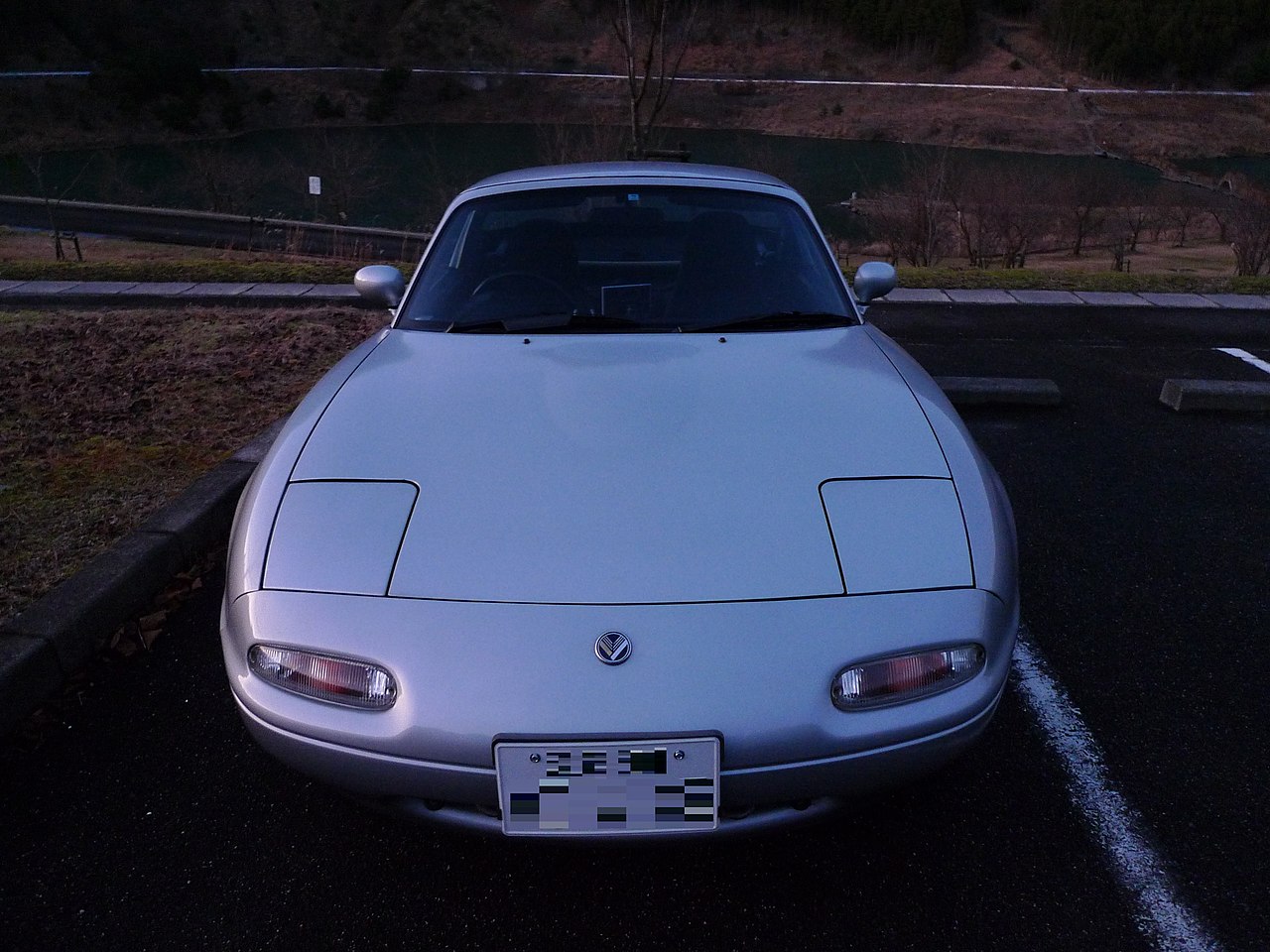
Mazda Roadster (Eunos / NA & NB Miata)
If one car is the perfect first sports-car import, it is this. The Japanese-market Roadster is light (about 2,160 lb), simple, bulletproof and the cheapest path to a proper rear-drive convertible. The 1.6L makes around 118 hp and the 1.8L around 128 hp — modest numbers that feel fast because the car is so light. Endless parts, a huge community, and forgiving manners. The benchmark.
Toyota Altezza RS200
A rear-wheel-drive sport sedan with a screaming 2.0L 3S-GE BEAMS four that revs past 8,000 rpm and makes around 207 hp, paired to a 6-speed manual. It is the practical enthusiast's secret — Lexus IS200 looks, four doors, Toyota reliability and deep parts support. Approachable to own and still affordable. See the Toyota Altezza RS200 guide.
Nissan Silvia S15
The drift-scene darling: a balanced RWD coupe with the turbocharged SR20DET (around 247 hp in Spec-R form) and a slick 6-speed. It is a fantastic first “real” sports import, but be honest about the budget — clean S15s now trade from the high teens into the $40k+ range, and many have been modified. Buy a stock, documented car. Read the Nissan Silvia S15 guide.
Nissan Skyline (Non-GT-R)
You do not need a GT-R to own a Skyline. The R34 GT-t and its R32/R33 GTS-T predecessors run a single-turbo RB25DET (about 280 hp) through the rear wheels — lighter, more playful and a fraction of GT-R money. It is the smart way into the Skyline legend, with the same tuning culture and a far gentler entry price.
Tier 3 — The Aspirational Picks
These are the cars people import because they are special. They can absolutely be a first import — just go in clear-eyed about the cost and, in one case, the upkeep.
Toyota Supra A80 (Mk4)
The 2JZ-GTE made the Mk4 Supra immortal, and a clean turbo car is now a blue-chip collectible — which is the catch. It is mechanically robust and a joy to own, but values mean this is an expensive first import where condition and history are everything. If the budget is there, few cars are more satisfying. Read the full Toyota Supra A80 guide.
Mazda RX-7 FD (Caveat: Rotary)
Gorgeous, light and intoxicating — and the one pick we ask you to think twice about. The twin-turbo 13B rotary needs frequent oil top-ups, oil changes every 2,500–3,000 miles, careful warm-ups, and a rebuild is not rare if a previous owner neglected it. A well-kept FD is wonderful; a cheap one is a money pit. Only choose it as a first import if you embrace the maintenance.
The Honda Crowd
Beyond our nine, the Honda Civic Type R (EK9), Integra Type R and the naturally aspirated Honda Beat kei roadster are all approachable, well-supported and a blast. They prove the same rule: front-drive or kei, the simplest Japanese cars make the friendliest first imports.
Quick Hits for First-Time Importers
The 25-year rule counts from the month of manufacture, not the model year — a car built in August 2001 is eligible in August 2026, not January.
Federal duty on an imported passenger car is just 2.5% of the declared value. Trucks are higher, but kei trucks usually clear as the cheapest class of import.
Right-hand drive is legal in all 50 states. There is no federal conversion requirement for a 25-year-old import.
The Mazda Roadster weighs only about 2,160 lb — lighter than almost anything new — which is why ~120 hp feels genuinely quick.
A kei truck or van uses a 659cc engine to fit Japan's kei class — tiny, simple, and astonishingly tough.
The Altezza RS200's 3S-GE BEAMS engine revs to roughly 8,200 rpm — one of the highest-revving four-cylinders Toyota ever sold.
The Skyline GT-t is not a GT-R — RWD and a single-turbo RB25DET — which is exactly why it costs a fraction of one.
The auction inspection sheet is your best friend. A trusted agent reading it correctly is worth more than any photo.
Frequently Asked
What is a good first car to import from Japan?
For most first-time buyers, the easiest wins are a kei truck like the Daihatsu Hijet, a practical van like the Toyota Estima or HiAce, or the Mazda Roadster (NA/NB Miata) if you want a sports car. All three are cheap to run, mechanically simple, well-supported for parts, and very hard to get wrong. Save the Supra, S15 or RX-7 for when you know the process.
What is the cheapest Japanese car to import?
Kei trucks and kei cars are the cheapest path. A Daihatsu Hijet can start around 3,000 to 5,000 dollars in Japan and land in the US for roughly 6,000 to 12,000 dollars all-in, depending on condition and shipping. The Daihatsu Mira Gino is a similarly affordable kei car. Always budget the landed cost, not the auction price.
What is the most reliable Japanese car to import?
The Toyota vans and kei trucks are the reliability champions. A Toyota HiAce is built to run past 350,000 miles, the Estima has famously cheap and simple upkeep, and Daihatsu kei trucks routinely still work daily at 25 years old. Among sports cars, the Mazda Roadster and Toyota Altezza are the most dependable. The one to be careful with is the rotary RX-7, which demands diligent maintenance.
Is a kei truck a good first import?
Yes, it is arguably the best first import there is. A kei truck is cheap to buy, dead simple mechanically, useful on a farm or job site, and very low risk. The main trade-offs are modest top speed and a preference for back roads over the interstate, plus a few states restrict where kei vehicles can be registered for road use, so check your local rules before buying.
Should my first import be a project or a turnkey car?
Buy the most turnkey car you can afford. A clean, sorted, drive-it-home import costs more up front but saves money and stress, because you avoid the unknowns of a cheap project. Projects only make sense if you genuinely have the skills, time and budget for surprises. For a first import, boring and well-documented beats cheap and risky.
Is right-hand drive legal and hard to live with?
Right-hand drive is fully legal in all 50 states for a 25-year-old import, with no conversion required. Most owners adapt within a week or two and find it a non-issue. The only real friction is drive-throughs, toll booths and tight parking, so think it through if the car will be a daily commuter.
Do I need a manual to enjoy a Japanese import?
No. Most enthusiast cars are manual and the manual versions hold value best, but plenty of vans, kei trucks and base models came as automatics. If you cannot drive a stick, just confirm the transmission on the specific listing, since grades and trims vary widely within a model.
Can Octane import any of these for me?
Yes. Octane Automotive in Houston sources, inspects, imports and delivers any of these cars nationwide. We help you pick the right first import for your budget and use, find a clean documented example at auction in Japan, handle shipping, customs and the Texas title, and recondition it before it reaches you. You never touch a customs form.